




On this page
The Numbers That Matter
| What We Built | The Result |
|---|---|
| Keywords Ranking | 69 organic keywords in Google |
| Monthly Traffic Value | $981 (what they’d pay in ads for the same traffic) |
| #1 Positions | ”mx trophies” (320 monthly searches), “mx trophy” (90) |
| Backlinks | 977 from 177 referring domains |
| Top Commercial Keywords | ”motocross trophy” (#4), “dirt bike trophies” (#5), “motorsport trophies” (#5) |
| Investment Range | $5K-10K for complete website design |
| Timeline | Design completed Q4 2024 |
The Problem: 20 Years of Business, No Online Storefront
MX Trophies has been manufacturing custom awards since 2004. Founded by Nick Fain in Carson City, Nevada, the company grew into a 15-person operation producing roughly 4,500 awards per week. They make everything in-house: laser-cut acrylic, CNC-routed stainless steel, ABS framing, printed vinyl graphics. Their client list includes the American Motorcycle Association (AMA) and the MXGP Euro motocross series.
Here’s the disconnect: a company manufacturing thousands of awards weekly for some of the biggest names in motorsports had no professional online storefront.
All business came through direct relationships, trade shows, and word of mouth. When someone searched Google for “motocross trophies” or “custom racing awards,” MX Trophies wasn’t part of the conversation. Twenty years of reputation, zero digital presence capturing new customers.
The challenge wasn’t building awareness among people who already knew them. It was reaching the thousands of event organizers, racing leagues, and sports associations who search Google every month looking for exactly what MX Trophies makes.
This Works Well For
This case study is most relevant if you’re in one of these situations:
- You’ve been running your business for years through referrals and direct relationships, but you’re invisible online
- You manufacture or sell custom products and need an e-commerce store that handles complex product categories
- Your customers are event organizers, league directors, or B2B buyers who research vendors online before reaching out
- You want your website to generate leads from people you’ve never met, not just serve as a brochure for existing contacts
The business stage that fits:
- Established small businesses with proven products but no professional web presence
- Manufacturers moving from offline-only sales to e-commerce
- B2B companies where the product catalog spans dozens of categories and sports
- Businesses where the quality speaks for itself, but the website needs to match
This probably isn’t your situation if:
- You already have a functioning e-commerce store and need optimization, not a rebuild
- Your products are simple enough for a basic Shopify template
- You sell a single product category with no customization options
The Design Challenge: One Store, 20+ Sports
MX Trophies doesn’t sell one type of award. They serve motocross, karting, power boat racing, jet ski, BMX, supermoto, rock racing, surfing, paddle boarding, soccer, fishing, rally, sprint cars, and more. Each sport has its own audience, its own visual language, and its own product needs.
The website design challenge came down to three problems:
1. Product diversity without confusion. How do you present acrylic plaques, medallions, custom trophies, banners, flags, canopies, stickers, pins, and key chains without overwhelming the visitor? The homepage needed to function as both a catalog overview and a conversion path.
2. Sport-specific experiences within one store. An event organizer looking for power boat racing trophies doesn’t care about motocross banners. Each sport category needed its own landing page with relevant imagery, targeted messaging, and product examples specific to that audience.
3. B2B buying behavior. MX Trophies’ customers aren’t impulse shoppers. They’re event organizers placing bulk orders, often with custom artwork and tight event deadlines. The ordering process needed to feel quick and reliable: “free design, fast turnaround, on-time delivery.”
How I Solved It
I designed all page templates in Figma, working within MX Trophies’ existing red, black, and white brand identity.
The homepage opens with a bold hero showcasing their core product (racing awards), then immediately presents the ordering proposition: “Quick. Convenient. Easy.” Below that, a product category grid lets visitors self-select by product type. The process section breaks down ordering into simple steps. And the pricing section anchors expectations with starting prices for each category.
Category pages (like Acrylic Plaque Awards) follow a consistent template: hero with product imagery, ordering information, a comparison section to help buyers choose between product tiers, previous work gallery, testimonials, and a detailed FAQ section addressing common buyer questions.
Sport-specific landing pages (like Power Boat Racing Trophies) target each audience directly. The hero features sport-specific imagery and copy. “Why Choose Our Trophies?” addresses the quality, customization, and turnaround concerns that B2B buyers prioritize. A dedicated FAQ section answers questions specific to that sport’s trophy needs.
 Homepage
 Category Page
 Sport Landing Page
The SEO Results
Here’s the part that matters to business owners: if MX Trophies had to pay Google Ads for the same traffic they’re now getting organically, it would cost $981 every month. That’s $11,772 per year in traffic they don’t have to buy.
Current Organic Performance (February 2026)
- 69 organic keywords ranking in Google
- $981/month traffic value (equivalent ad spend)
- 977 backlinks from 177 referring domains
- #1 for branded terms: “mx trophies” (320 searches/month), “mx trophy” (90)
- Top commercial positions: “motocross trophy” (#4), “dirt bike trophies” (#5), “motorsport trophies” (#5)
- Keyword intent mix: 51.3% commercial, 30.3% informational, 15.8% transactional
The Branded Traffic Opportunity
Right now, 91.92% of MX Trophies’ organic traffic comes from branded searches (people typing the company name directly). Only 8.08% comes from non-branded terms like “motocross trophies” or “custom racing awards.”
That ratio tells a clear story: people who know MX Trophies can find them. But the massive audience of event organizers searching for trophy products by category, not by brand name, represents untapped demand. The site is already ranking for non-branded commercial terms (“motocross trophy” at #4, “dirt bike trophies” at #5). As SEO continues to build authority, those positions will climb and new keywords will enter the rankings.
The foundation is in place. The growth is ahead.
What Made This Work
Three things came together on this project:
1. Design built for B2B buyers. Event organizers and league directors don’t browse. They research, compare, and decide quickly. Every page I designed prioritized clarity: what products are available, how ordering works, what the pricing looks like, and how fast delivery happens. No fluff, no confusion.
2. Sport-specific landing pages as SEO entry points. Instead of one generic “awards” page, MX Trophies now has dedicated pages for each sport category. Each page targets the specific keywords that event organizers in that sport actually search for. “Power boat racing trophies” finds the power boat page. “Motocross banners” finds the banners page. The right visitor lands on the right page.
3. Technical execution on WordPress/WooCommerce. eSEO Space built a fast, clean WordPress/WooCommerce site that handles the product diversity without performance issues. Clean URLs, proper SEO markup, and a mobile-responsive build that works for organizers checking products from the track.
About the Partnership
This project was a collaboration between two specialized teams:
Digital Marketing Services (DMS):
- Complete website UI/UX design in Figma
- All page templates: homepage, category pages, sport-specific landing pages, product pages, contact, and ordering flow
- Visual hierarchy and conversion optimization within the existing brand identity
- Information architecture for 20+ sport categories and multiple product types
eSEO Space:
- WordPress/WooCommerce development
- SEO strategy and keyword targeting
- Technical SEO and performance optimization
- Site launch and ongoing organic growth
I’ve worked with eSEO Space for over 4 years. When e-commerce projects need the full development and SEO stack, they handle the execution while I focus on design strategy. This model works because each team stays in their zone of expertise.
Common Questions
Frequently Asked Questions
This project fell in the $5,000-10,000 range for the complete design. That covered all core page templates: homepage, product category pages, sport-specific landing pages, and the ordering flow. The investment varies depending on how many product categories you have and how much custom design work each template needs. For a business with 20+ categories like MX Trophies, the design investment is on the higher end of that range because each category template needs sport-specific imagery and messaging.
The design phase for MX Trophies took about 2-3 months. From there, development, content, and launch added another few months. Timeline depends on product catalog complexity, how many unique page templates are needed, and how quickly you can provide product photos and brand assets.
It's actually an advantage. MX Trophies had 20 years of business reputation, AMA-level clients, and real manufacturing capabilities. All of that translates into credibility that makes the website more convincing. You're not starting from scratch on trust, just on visibility. The website puts your existing reputation where new customers can find it.
Traffic cost is what you'd pay in Google Ads to get the same number of visitors you're getting for free through organic search. MX Trophies ranks for 69 keywords organically. If they had to buy those clicks through ads, it would cost $981 every month, or about $11,772 per year. That number only grows as more keywords rank higher.
Yes, with the right information architecture. The key is creating dedicated pages for each major product category and each target audience (sport). MX Trophies serves 20+ sports and sells everything from acrylic plaques to canopies to stickers. The design solution was a clear homepage that acts as a directory, with each category and sport getting its own focused page. Visitors self-select into their relevant path within seconds.
A premium theme can get you 80% of the way there for basic products. But when your catalog spans dozens of categories, your buyers are B2B event organizers with specific needs, and your reputation includes clients like AMA, a template won't communicate that authority. Custom design means every page is built for your specific audience and buying process. For MX Trophies, that meant sport-specific landing pages that a template simply doesn't support.
You don't need 20+ sport-specific landing pages on day one. Start with a strong homepage, your top 3-5 product categories, and a clear ordering process. That foundation can cost less than $5K for design. As revenue grows, you add category pages and sport-specific landing pages over time. The key is starting with a professional presence that matches your actual business quality.
Not Ready Yet?
That’s fine. Here’s how to think about this for your own business.
Do this now (free, takes 10 minutes):
- Search Google for your main product category (not your company name). Do you show up? If not, every one of those searchers is finding your competitors instead.
- Look at your top 3 competitors’ websites. Would a first-time buyer choose them over you based on what they see online?
- Check your Google Business Profile. Is it complete, accurate, and showing your products?
Questions to answer before we talk:
- How many product categories or services do you offer? (This affects design complexity and investment.)
- Do your customers research and compare vendors online before contacting you?
- Is your current online presence (or lack of one) costing you business you’ll never know about?
When the timing is right: I design e-commerce experiences for businesses with complex product catalogs and B2B buying cycles. If you’ve been relying on referrals and trade shows while your competitors capture online demand, send me your current site (or tell me you don’t have one) and I’ll show you what you’re leaving on the table.
Case study by
Kristian Kreaktive
Founder & Lead Strategist at Digital Marketing Services
17+ years of experience helping small businesses grow their online presence through strategic SEO, web design, and branding.
In collaboration with
eSEO Space
Development & SEO
I designed the complete UI/UX for all page templates in Figma. eSEO Space handled the WordPress/WooCommerce development and SEO strategy.
Learn more about our partnershipMore Web Design Success Stories

Bot Image AI: Zero to 158 Keywords for FDA-Cleared Tech
158 organic keywords with #1 positions for ProstatID and core brand terms

Ladies of Liberty: A Redesign That Matched the Mission's Energy
249 organic keywords and #1 rankings for core brand terms plus top-5 positions for high-search-volume speaker names
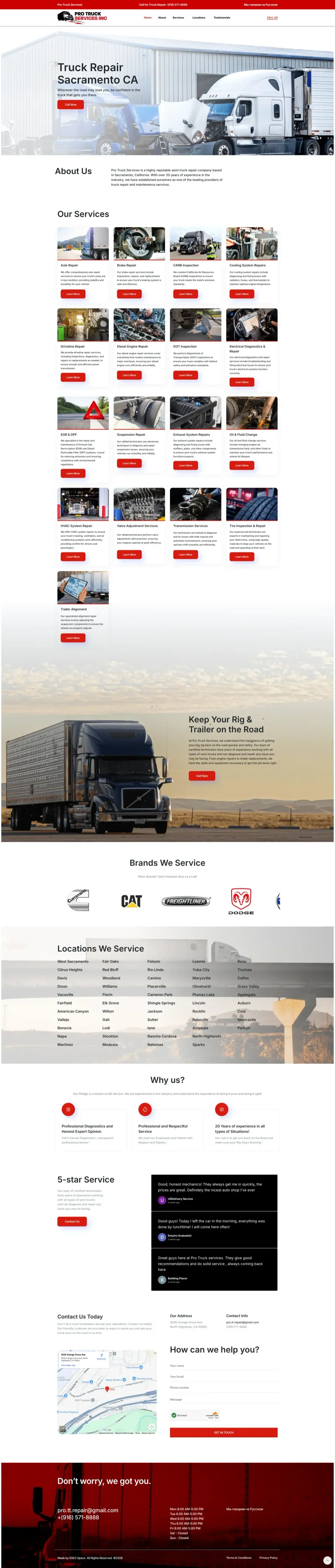
Website Design and Local SEO for Truck Repair in Sacramento, CA
0 to 31 organic keywords with multi-location visibility across Sacramento metro