


International Branding: Lessons from Building Brands in Spain and Colorado
I started a branding agency in Bilbao, Spain in 2011. Here are the international branding lessons I bring to every project, including the ones right here in Colorado.
TL;DR
International branding is not a translation exercise. It's a cultural adaptation exercise. Since starting KREAKTIVE in Spain in 2011, I can tell you the agencies getting this wrong are the ones treating it like a language swap instead of a strategy shift.
On this page
I started a branding agency in Bilbao, Spain in 2011. I ran it for over a decade, built a business called KREAKTIVE, and served 300+ clients across multiple countries before moving to Colorado Springs.
When I tell people this in Colorado, they usually pause. Then they ask: “So… why here?”
Here’s my answer: I came here because I’m good at this, and I bring something no one in this market can replicate. Over a decade of hands-on international branding lessons that only come from actually working across cultures, languages, and markets.
This post is about what that experience taught me. Not theory. Not a collection of case studies from brands I’ve never worked with. These are lessons from my own projects, with clients I sat across the table from, in offices where the meetings happened in Spanish, Basque, or some mix of both.
My Journey: From Bilbao to the Basque Country to Colorado Springs
How Running KREAKTIVE in Spain Shaped My Approach
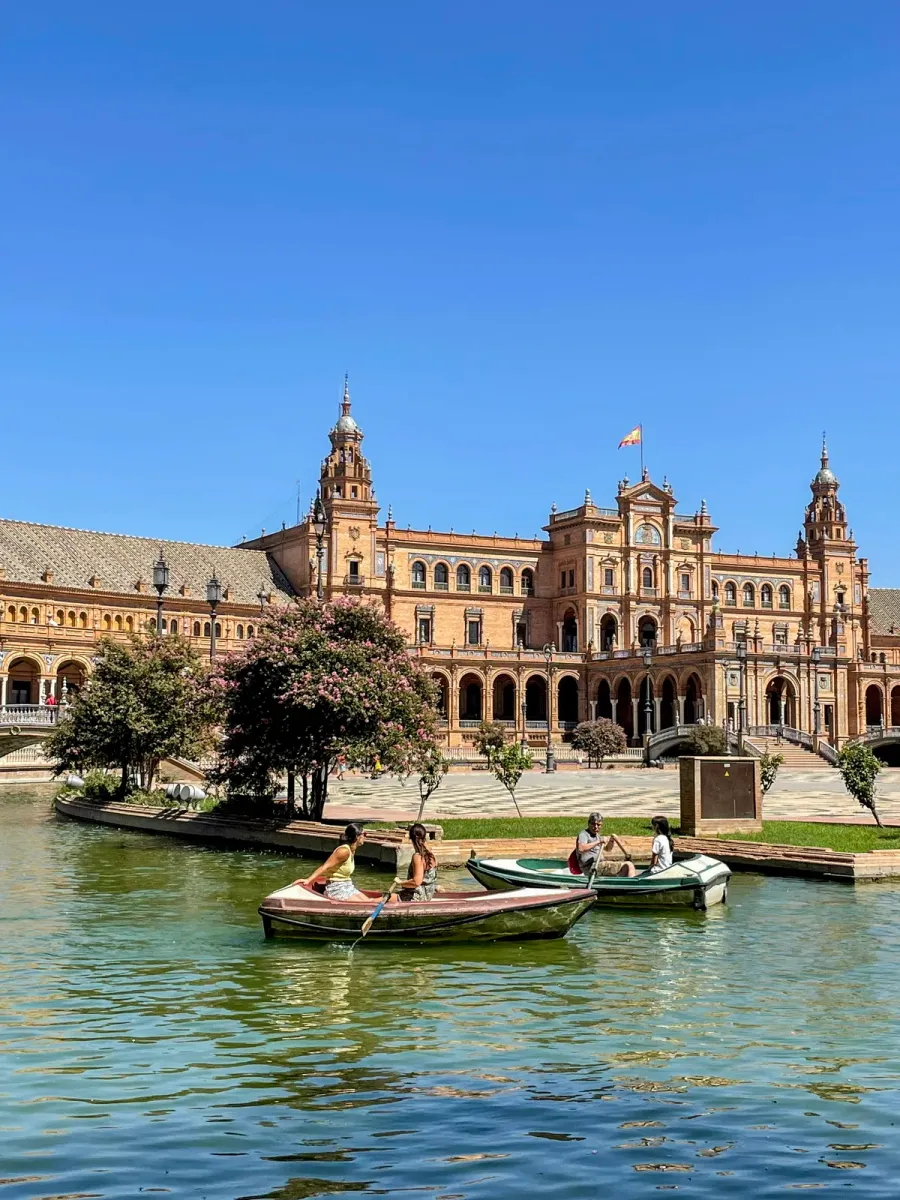
I launched KREAKTIVE in 2011 in Bilbao, the largest city in Spain’s Basque Country. The Basque Country is a region with its own language (Euskera), its own cultural identity, and a fierce pride that shows up in everything from food to business.
Working there taught me something I couldn’t have learned anywhere else: your brand is not what you think it is. Your brand is what the local culture decides it is.
In the US, branding is often treated as an exercise in self-expression. “Here’s who we are, take it or leave it.” That works when your audience shares your cultural assumptions. It falls apart when they don’t.
In the Basque Country, I had to learn a different approach. Basque businesses value tradition. They value local roots. They’re skeptical of outsiders who show up with flashy presentations and aggressive sales pitches. I learned to listen more, pitch less, and let the work speak for itself.
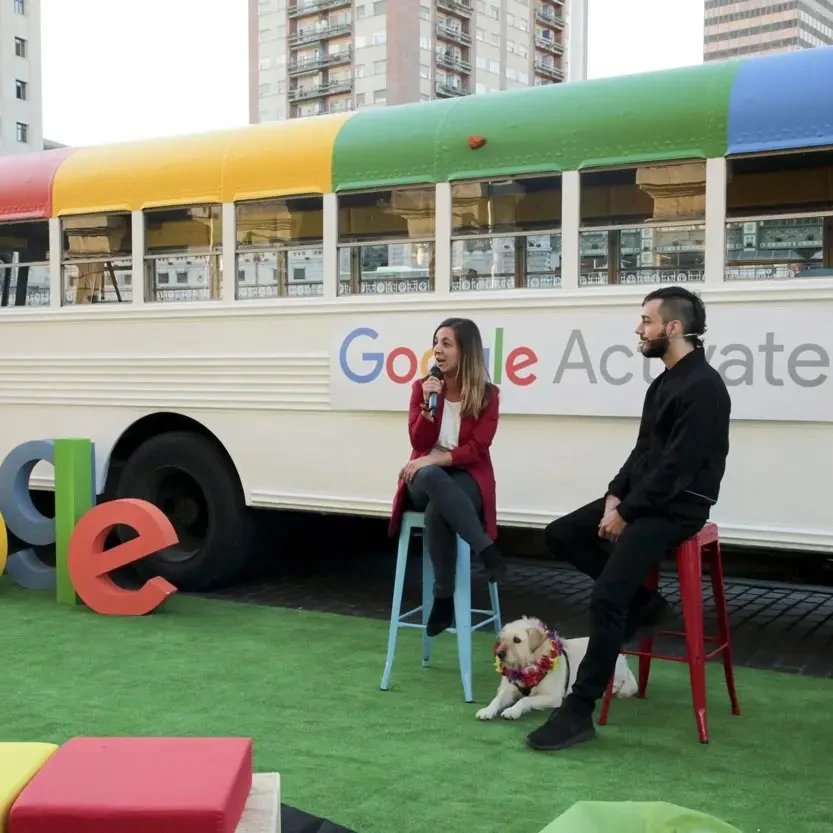
That work earned recognition, including being featured in Google’s marketing resources.
That lesson changed how I do everything. Even now, sitting in my Colorado Springs office, I apply the same principle: understand the audience first, design second.
The Culture Shock of Marketing in America After Marketing in Europe
When I moved to Colorado Springs in 2023 and launched DMS, the cultural shift hit me harder than I expected.
In Spain, marketing is relationship-first. You meet someone for coffee three times before you talk business. Trust is built slowly, through personal connection and demonstrated competence.
In America, marketing is benefit-first. Lead with the result. Show the numbers. Get to the point. People want to know what you can do for them before they care who you are.
Neither approach is wrong. But understanding both gives me an advantage most agencies here don’t have. I can switch between styles. I know when a direct, numbers-driven pitch works and when a slower, relationship-building approach gets better results.
Why Working Across Cultures Made Me a Better Marketer Everywhere
Running an agency in Spain since 2011 rewired how I approach every project. The biggest shift: I stopped assuming. Most American marketers assume their audience thinks like they do. I’ve had that assumption shattered so many times that I now start every project by asking, “Who is this for, and what do they actually care about?” not “What do I think looks good?”
That mindset change bleeds into everything. I notice details others skip because I’ve designed for audiences in Spain, Germany, and the US. Colors carry different meanings across cultures. Humor doesn’t translate. The amount of text people expect on a page varies by country. Once you’ve had a design rejected because the color palette felt “cold” to a Basque audience, you stop making lazy default choices.
And then there’s restraint. European design tends to be more minimal, more confident in white space, more willing to let one strong element carry the page. That sensibility shows up in every brand I build, and it stands out in a market where most agencies default to “more is more.”
What Most Agencies Get Wrong About International Branding
Translation Is Not Localization
I’ve seen this mistake more times than I can count. A company wants to expand internationally, so they hire a translator. They take their English website, swap the text, and call it done.
Then they wonder why it doesn’t work.
A real multilingual brand strategy goes beyond swapping text. Translation handles words. Localization handles meaning. Brand strategy handles identity. These are three completely different jobs.
When I built the website for Guitar Academy Bilbao, the site was entirely in Spanish, optimized for Spanish search behavior. The content wasn’t translated from an English template. I wrote it natively in Spanish, targeting the specific keywords Spanish speakers actually use. “Clases de guitarra Bilbao” is not a translation of “guitar lessons Bilbao.” It’s a completely different search ecosystem with different competitors, different volumes, and different user intent.
The result: 412% organic traffic growth and #1 rankings for Bilbao guitar lesson searches. That doesn’t happen through translation. It happens through cultural understanding.
The “Just Change the Language” Fallacy
According to CSA Research’s “Can’t Read, Won’t Buy” study, 76% of online consumers prefer to buy products with information in their own language. But “their own language” doesn’t mean word-for-word translation. It means messaging that sounds like it was written by someone who actually lives in their world.
The fundamental difference: American marketing is direct and benefit-driven. European marketing, particularly in Spain and the Basque Country, is often narrative and relationship-driven. An American landing page might lead with “Get 50% more leads in 30 days.” A Spanish audience would find that aggressive. They’d respond better to a story about how a business like theirs grew over time.
Why American Marketing Strategies Don’t Work in Europe
Colors are a simple example. In the US, blue conveys trust and professionalism (think every bank and tech company). In parts of Southern Europe, blue can feel cold and corporate in sectors where warmth matters.
Humor is harder. American advertising relies heavily on witty one-liners and sarcasm. In Spain, humor is more physical, more situational, and deeply tied to regional culture. A joke that kills in Madrid might fall flat in Bilbao because Basque humor has its own rhythm.
Design expectations are perhaps the most overlooked difference. When I designed the brand identity for Olivia Boutique, a luxury fashion store in Bilbao’s Casco Viejo, I leaned into European restraint. No tagline. No icon. No graphic. Just the name, set in a custom serif with copper foil on cotton paper.
In America, a luxury boutique might add a monogram, a crest, or a lifestyle tagline. In Bilbao’s old quarter, that would read as trying too hard. The European approach: confidence doesn’t need to be loud.
The result: “Customers now expect to pay more, and they do.” A brand identity that shifted price perception upward without changing a single product.
The Three Pillars of Cross-Cultural Branding
After building brands across Spain, Germany, and the US, I keep coming back to the same three principles. They didn’t come from a marketing course. They came from projects where getting it wrong cost real money, and where getting it right produced results that still surprise me.
Pillar 1: Universal Brand Values (What Stays the Same)
Every brand has a core that should never change regardless of market. Your mission. Your quality standards. Your fundamental promise.
When I built the brand for Sakaldi Energy & Telecom, a B2B consulting firm in Bilbao, the core value was clear: trusted expertise in complex energy and telecom procurement. That value translates to any market. What changes is how you express it.
The logo I designed contains the hidden initials M and S (the owner’s wife Marta and daughter Sandra) woven into organic overlapping loops. That personal meaning is universal. The visual execution, a fresh green palette with clean minimalism and 3D office signage, was calibrated specifically for Basque Country business culture, where understated professionalism earns trust faster than any website.
Pillar 2: Cultural Adaptation (What Changes)
Your brand’s expression needs to flex. Tone of voice. Visual style. Sales approach. The level of formality. The amount of information you put on a page. All of this changes by culture.
For Ariadna Coaching in Barcelona, I built the entire brand around Greek mythology. Ariadna is a common Spanish name that connects directly to the myth of Ariadne and the labyrinth. We turned that story into the brand’s backbone: Ariadna guides you out of your emotional labyrinth. Each business card had a different maze to solve. The mythology metaphor resonated deeply in a Spanish market that values storytelling and narrative depth.
She went from struggling to find clients to a waitlist of 350+. Not because the coaching changed. Because the brand finally communicated the value in a way that connected with her specific cultural audience.
Would that same approach work for a coaching brand in Colorado Springs? Maybe. But the execution would be completely different. American audiences tend to respond to transformation stories, not mythological metaphors. The brand essence (guidance through complexity) could survive. The cultural expression would need to change.
Pillar 3: Local Execution (Who Delivers It)
The best cross-cultural branding strategy fails if the execution doesn’t feel local. This means working with people who understand the target culture, not just people who speak the language. You can get the strategy right and the messaging right, but if the person writing the copy has never lived in that market, the audience will sense it.
When I worked with MERAIR Trade Consulting in Bilbao, the website content was written natively in Spanish. Not translated. The keyword research targeted the specific terms Spanish businesses use when searching for import/export help. From zero online presence to fully booked in 6 months, with 15 qualified leads per month and zero ad spend.
That result only happened because the execution was locally authentic. A translated English site wouldn’t have ranked. A translated message wouldn’t have converted. The market can always tell the difference.
Case Studies: Branding That Works Across Cultures
This is where I stop talking principles and show you the proof. Every project below is real, verified, and linked to its full case study.
Healthcare: Cultural Sensitivity in Medical Branding
Jaio Ginecologia is a gynecology clinic in northern Spain. Healthcare branding requires extra cultural awareness because medical trust is deeply personal and varies across cultures.
In Spain, patients expect warmth from their healthcare providers. The clinical, sterile aesthetic common in American medical branding would feel cold and impersonal. I designed a brand identity that balanced medical authority with emotional warmth: approachable without being casual, professional without being intimidating.
The appointment calendar went from half-empty to fully booked. Not because the doctor got better at medicine. Because the brand finally communicated the care that was already there.
Fashion: Editorial Standards Across Borders
Demanuel was a bridal fashion designer in Bilbao launching his debut collection, TUL TUL. He had four handcrafted dresses and zero brand presence. I handled everything: logo design, brand identity, and full editorial photography production (model casting, hair and makeup, styling, art direction).
Fashion branding operates at a global standard. The visual quality expected in Paris or Milan is the same expected in Bilbao or New York. Understanding those universal standards while executing within Basque culture, where client relationships and referral networks operate differently, is cross-cultural branding in practice. His first collection went to market with a brand identity and editorial portfolio ready for press.
B2B: Earning Enterprise Trust in the Basque Country
I already mentioned Sakaldi above, but the trust dimension deserves emphasis. In the Basque Country, business trust builds slowly. The brand needed to communicate permanence, expertise, and seriousness before anyone opened a pitch deck.
The 3D logo installed in their Bilbao office reception is one of my favorite deliverables from any project. When clients walk in for a meeting, the brand sets the tone before anyone says a word. The new identity opened doors to larger enterprise energy contracts. Visual credibility matched their consulting expertise, and prospects started treating them accordingly.
Retail Luxury: Price Perception Through Design
Olivia’s story is worth repeating here because the lesson is universal. Your brand creates a price ceiling. If your visual identity signals mid-market, customers arrive with mid-market expectations. Fix the brand, and price perception follows. That’s not theory. That’s what happened.
SEO in a Foreign Language: Guitar Academy Bilbao
Guitar Academy’s 412% traffic growth happened because I optimized for how Spanish speakers actually search, not how an English speaker would translate their queries. A solo teacher became a multi-instructor academy with 350+ students. That’s the business impact of treating a foreign market as its own ecosystem instead of a translation project.
Small Market, Big Returns: MERAIR
MERAIR is proof that search volume doesn’t equal opportunity. Fifty monthly searches. Every competitor’s website was built between 1999 and 2005. A modern, professionally branded consulting presence with strategic SEO, and within six months the founder was turning down work. Fully booked. Zero ad spend.
As Martin Roll writes about cross-cultural branding, understanding the cultural context of a market is what separates brands that merely translate from brands that actually connect. Every one of these projects proves that point.
How International Experience Makes DMS Different (Even for Local Colorado Clients)
You might be reading this and thinking: “Interesting, but my business is in Colorado. I’m not expanding internationally.”
Here’s why this still matters to you.
Cross-Cultural Skills Applied to Diverse American Markets
Colorado Springs is more diverse than most people assume. Military families from around the world. A growing Hispanic population. International businesses. Tourism from every continent.
If your brand speaks to only one cultural perspective, you’re leaving money on the table. My years of designing for multicultural audiences mean I instinctively consider how different groups will perceive your brand. That’s not a checkbox exercise. It’s a trained instinct from over a decade of practice.
Visual Design Informed by European Aesthetics
Most agencies in Colorado pull from the same American design playbook. Bold fonts. Bright colors. Lots of elements competing for attention. There’s nothing wrong with that approach when it fits.
But when I design for branding clients, I bring a European sensibility that emphasizes restraint, typography, and white space. The result is brands that look distinctive in the Colorado market precisely because they don’t look like everything else.
A Broader Perspective Creates Better Strategy
When you’ve built brands in the Basque Country, Barcelona, and Colorado, you develop pattern recognition that comes from variety, not repetition. I can spot assumptions that other agencies don’t even know they’re making.
That perspective shows up in everything from how I approach storytelling to how I structure a website’s visual hierarchy. It’s not about being international. It’s about seeing options others miss because they’ve never worked outside one cultural framework.
For branding fundamentals that apply regardless of market, I’ll be publishing a small business branding guide soon. But the international lens I bring to those fundamentals is what makes the work different.
International branding projects start at $2,700 (BE RECOGNIZED) for identity systems and go to $7,700 (BE REMEMBERED) for full strategic rebrands with cultural research. Every branding project includes a Love It Guarantee (I keep refining until you’re genuinely proud of the result), full ownership of all files and assets, and an Upgrade Path (start with BE RECOGNIZED and apply 100% of your investment toward BE REMEMBERED within 6 months). Even if you never plan to leave Colorado, that international perspective is built into every project I take on. It’s not an add-on. It’s how I think.
Whether you’re expanding internationally or serving a diverse local market, I bring a perspective most agencies simply don’t have. Let’s talk about your brand, or visit the branding services page to see how I can help.
Frequently Asked Questions
Not necessarily, but the principles of cross-cultural branding still apply. Colorado Springs has military families from around the world, a growing Hispanic population, and international tourism. Understanding how different audiences perceive your brand makes your marketing more effective, even if you never leave the state.
Translation swaps words from one language to another. Brand localization adapts your entire brand expression (messaging, visuals, tone, sales approach) to resonate with a specific cultural audience. A translated website might be technically accurate but feel foreign. A localized brand feels like it was built by someone who lives in that market.
A standard brand identity (BE RECOGNIZED at $2,700) takes 1-2 weeks. A full strategic rebrand with cultural research (BE REMEMBERED at $7,700) takes 4-5 weeks. Projects involving multilingual brand strategy or market-specific adaptations may take longer depending on scope.
Yes. Many businesses don't need a full rebrand. Sometimes it's about adapting your messaging for a new audience, adding multilingual touchpoints, or adjusting your visual tone for a different market. I can assess your current brand and recommend the right level of cultural adaptation.
International branding projects start at $2,700 (BE RECOGNIZED) for identity systems and go to $7,700 (BE REMEMBERED) for full strategic rebrands with cultural research. Every project includes a Love It Guarantee, full file ownership, and an upgrade path if you start smaller and decide to expand later.