
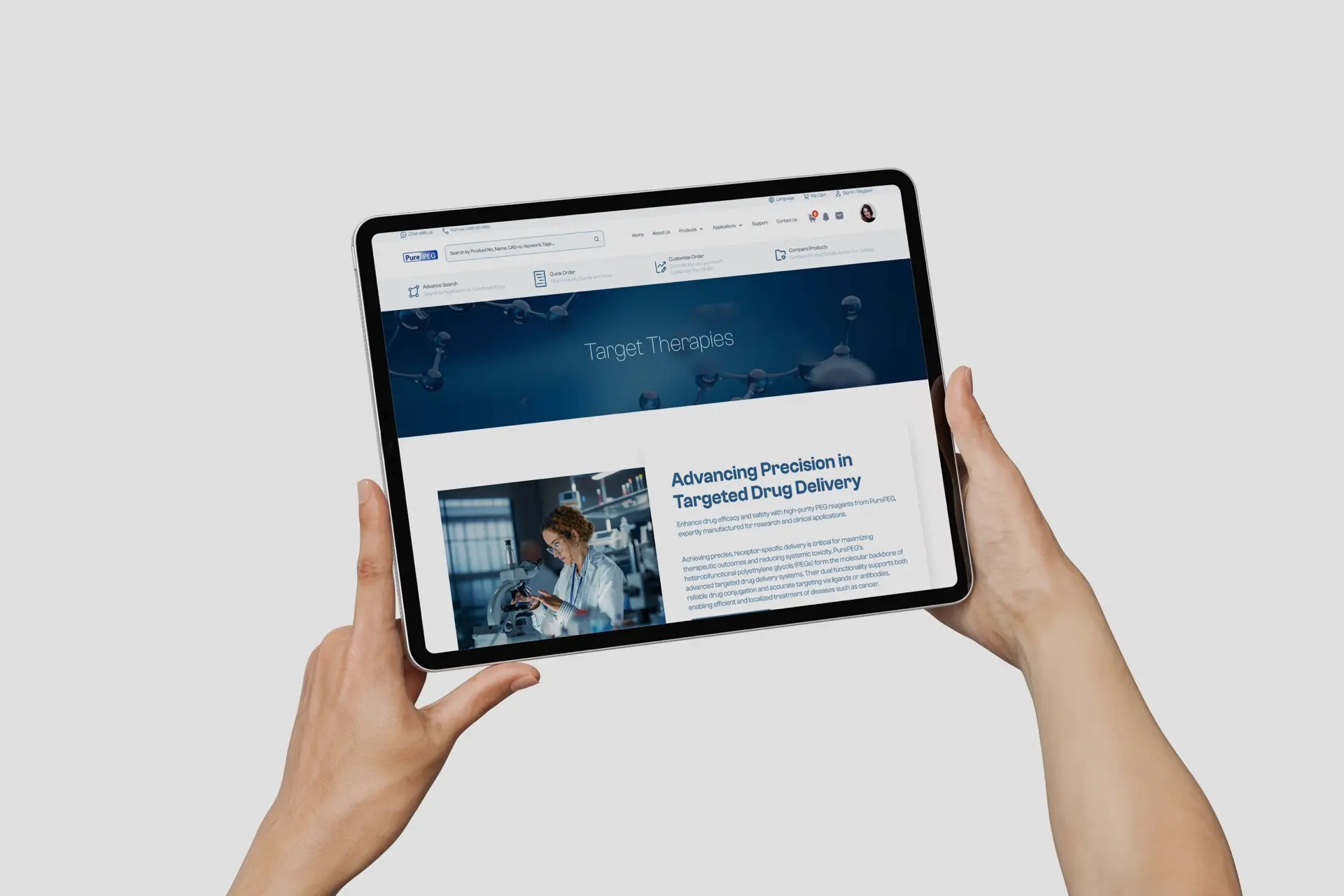
The Project
PurePEG manufactures monodisperse polyethylene glycol for pharmaceutical research. Their customers include PhD scientists, biotech labs, and pharmaceutical companies developing cancer treatments.
They needed a website that could explain complex chemistry to technical experts while remaining accessible to procurement teams. We partnered with ESEO SPACE to deliver the solution.
The Company
Most PEG suppliers sell polydisperse products—mixed molecular weights. PurePEG manufactures pure, single-weight PEG molecules with the precision that matters in drug development.
They developed the first acid-functionalized PEG used in FDA-approved cancer treatments, and their technology sits in the supply chain of 12 FDA-approved drugs. Based in San Diego, CA, they ship globally to clients who demand exact specifications.
The Challenge
The dual-audience problem was real. The people using these products have PhDs in chemistry. The people approving the purchases might not. We needed one website that served both groups without compromising either experience.
Trust was non-negotiable. In pharmaceutical research, one contaminated batch can kill an entire drug trial. Every design decision had to communicate reliability and precision.
Then there was the catalog complexity. PurePEG offers hundreds of products with different molecular weights and functional groups. Researchers needed to find exact specifications quickly, or they’d simply order from someone else.
Our Approach
We started by interviewing the PurePEG team and studying how researchers actually search for these products. What we found was clear: they want speed and specifications, not marketing language.
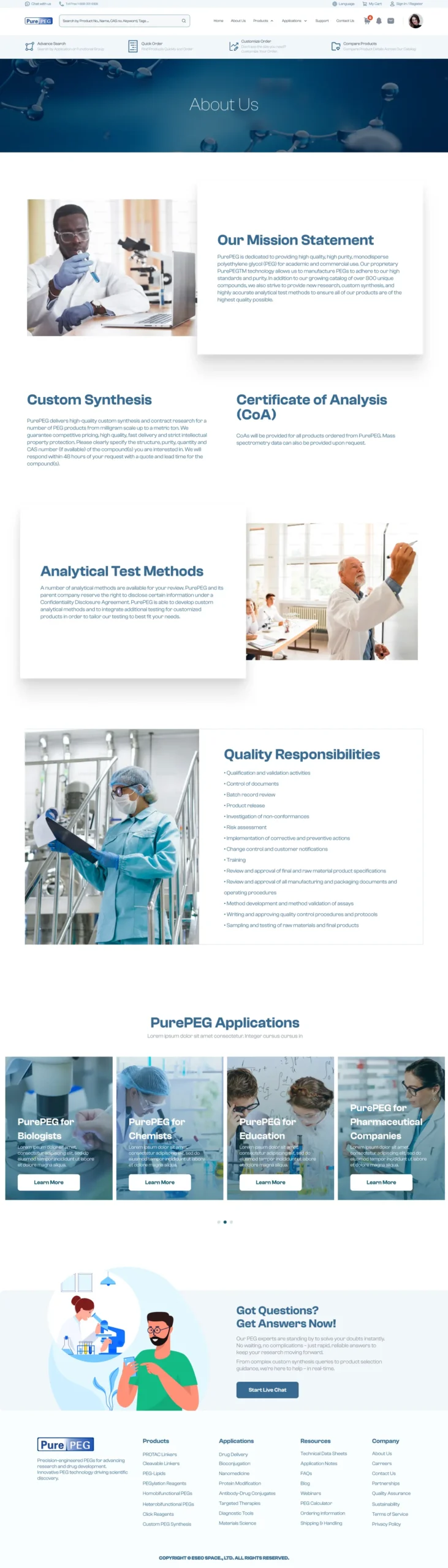
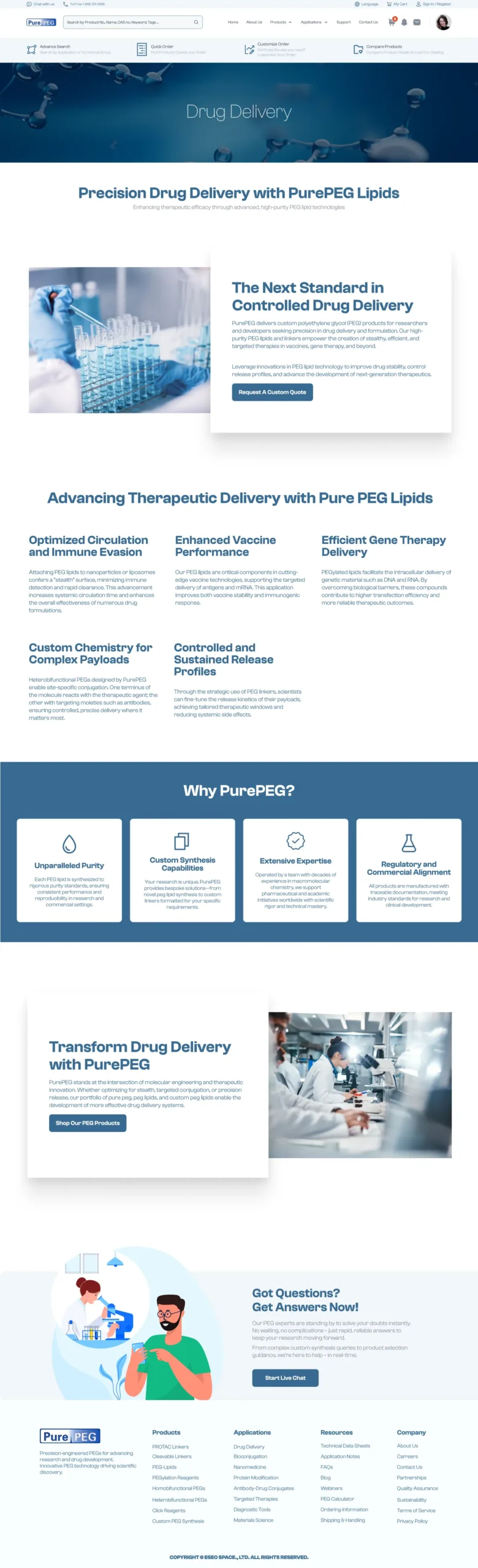
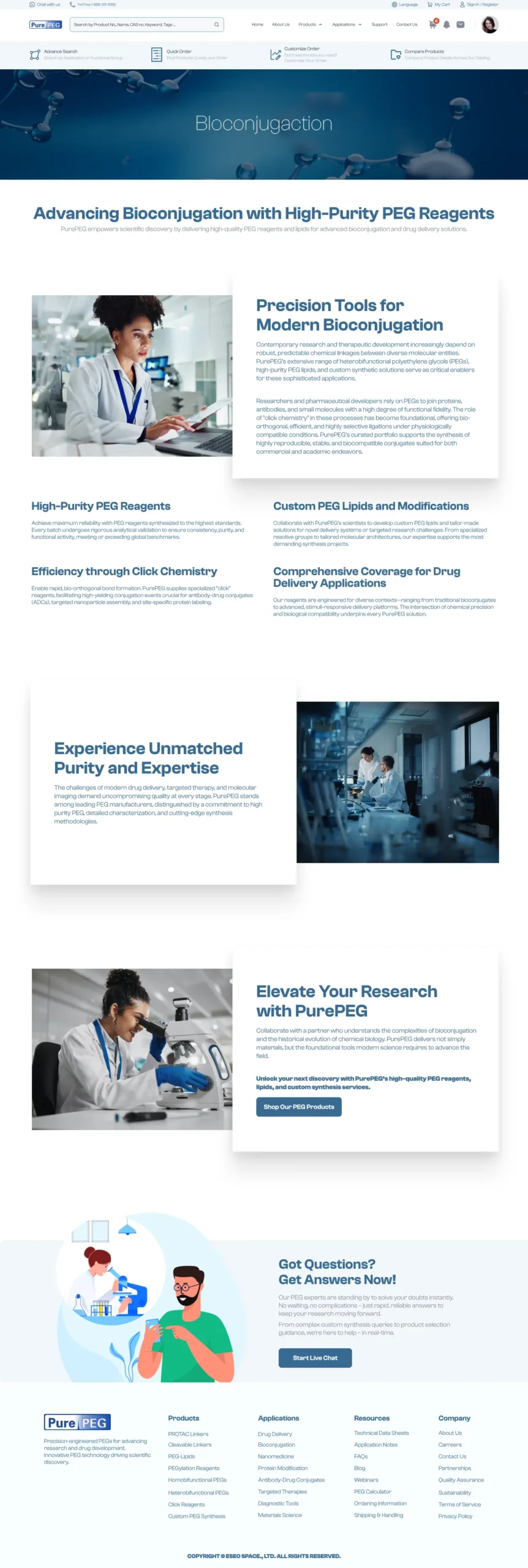
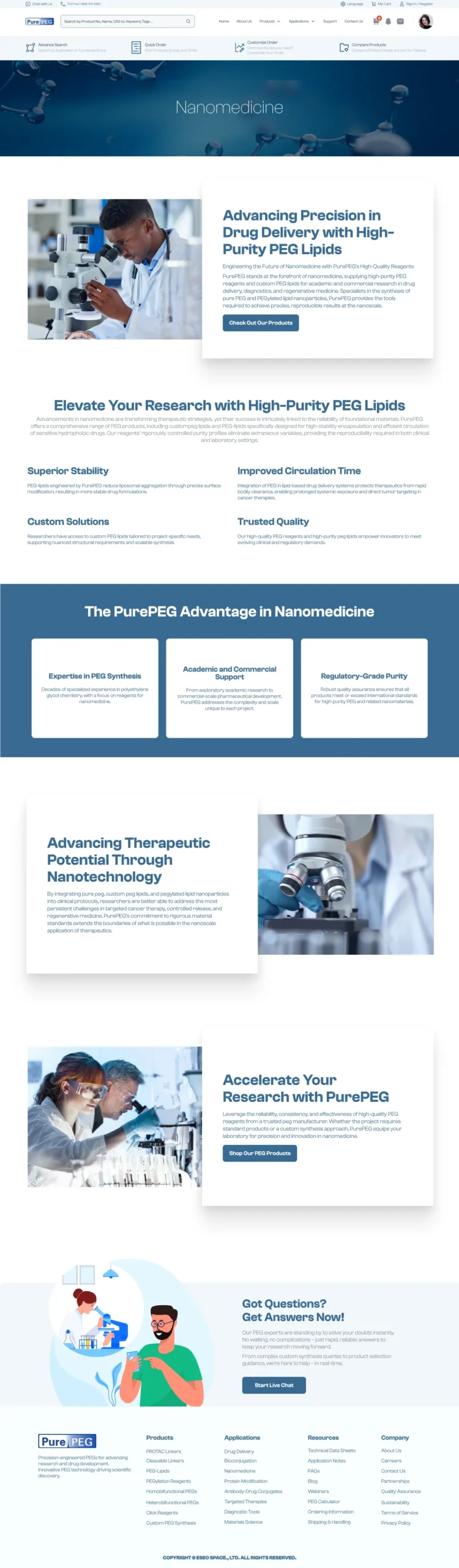
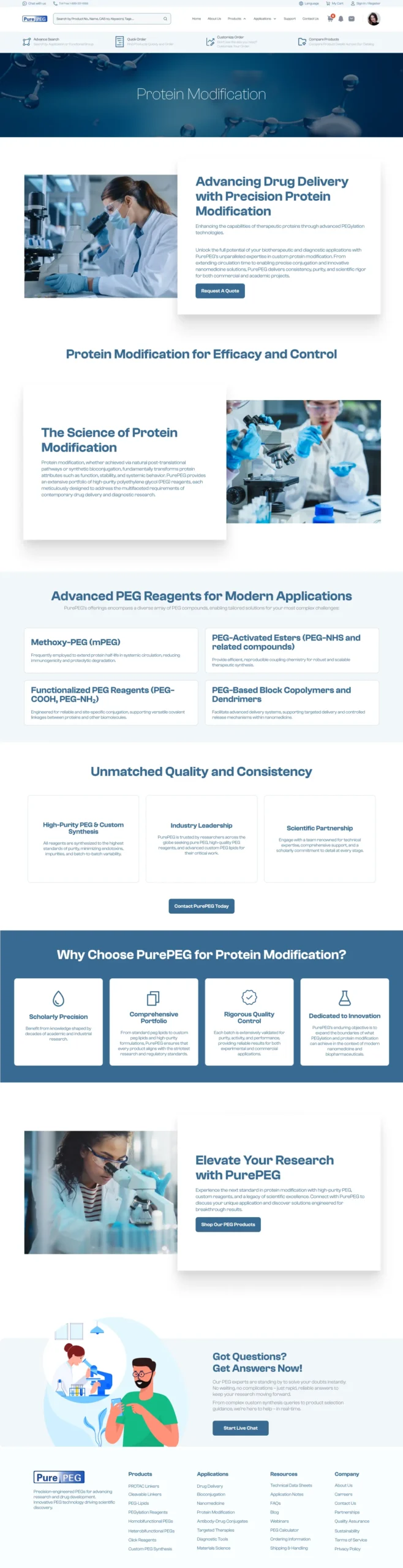
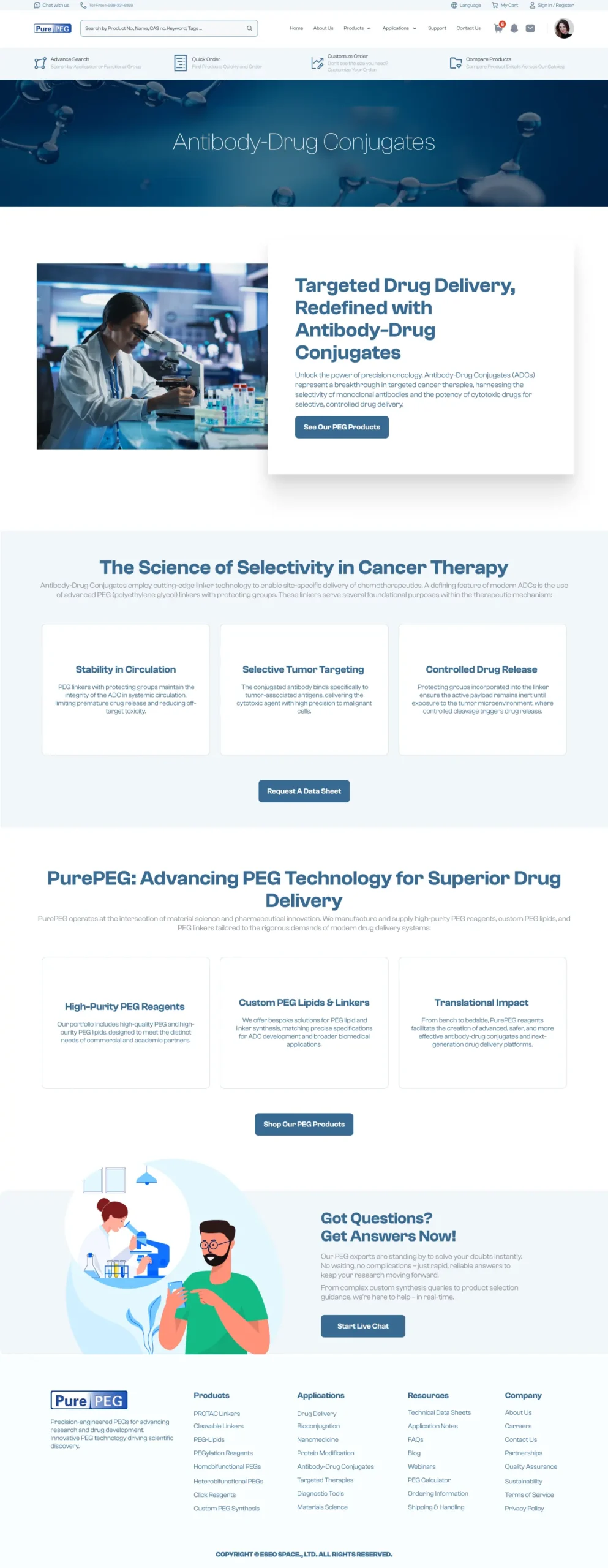
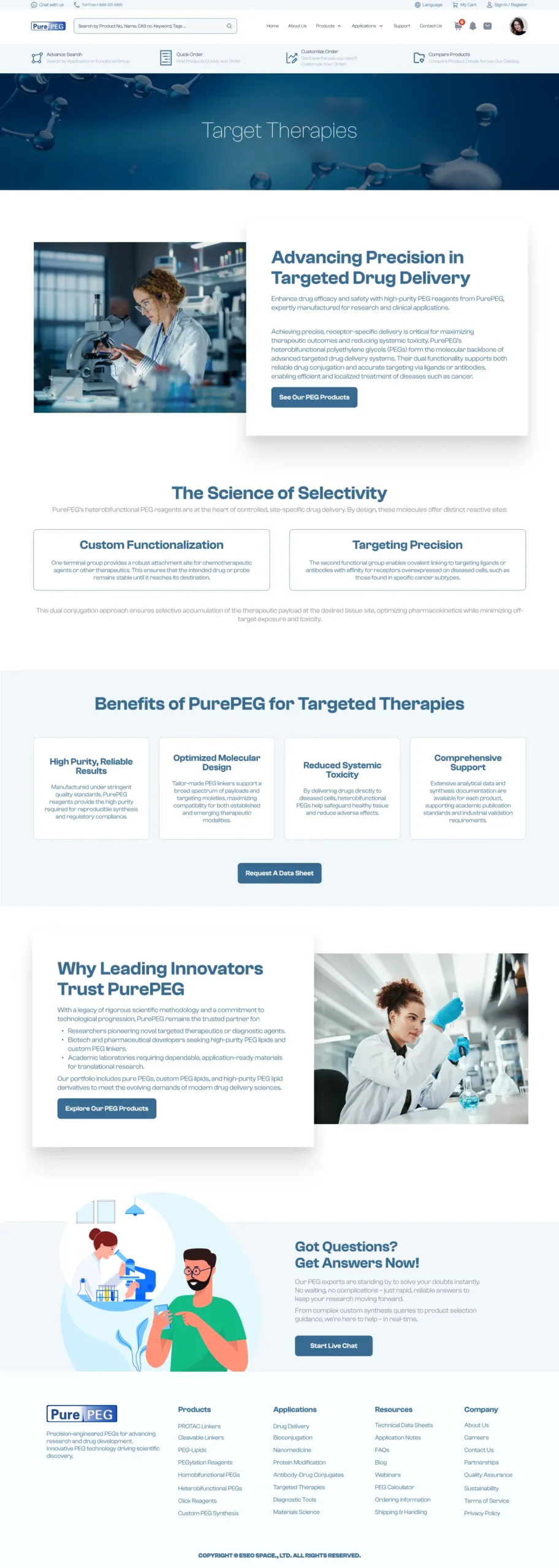
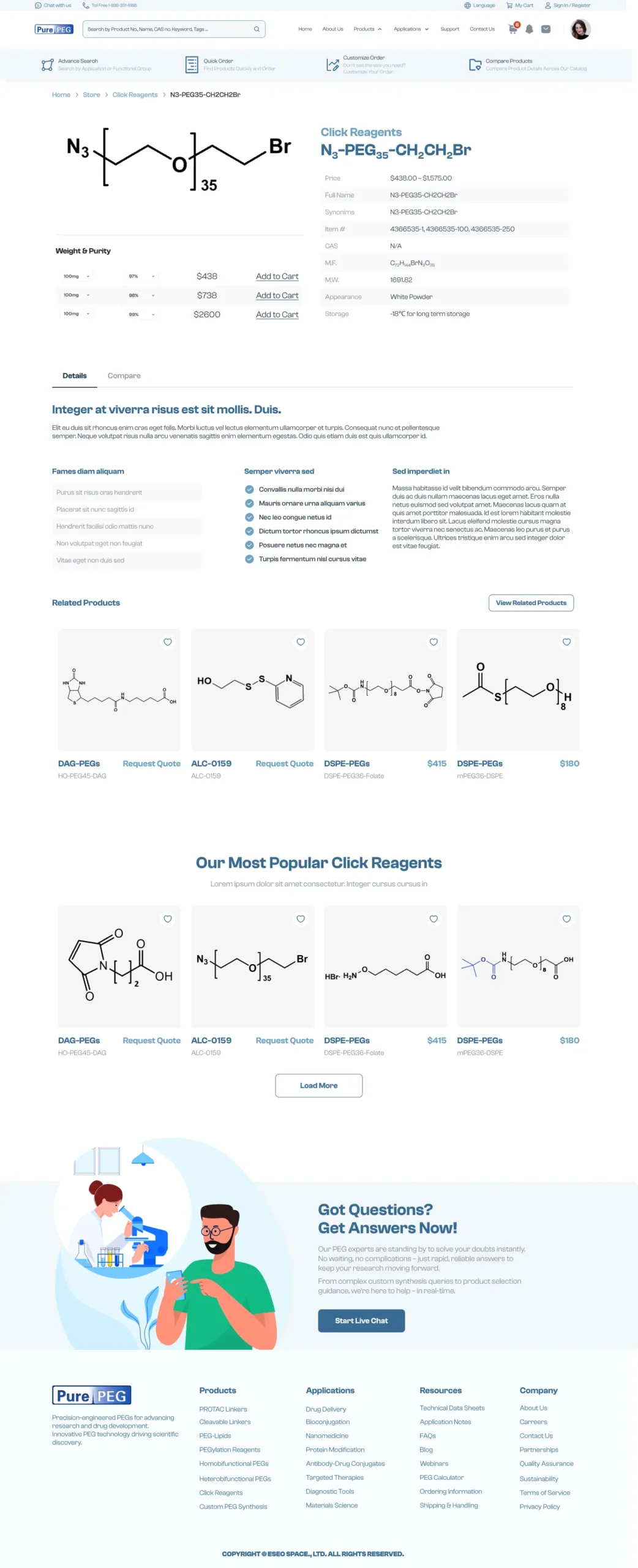
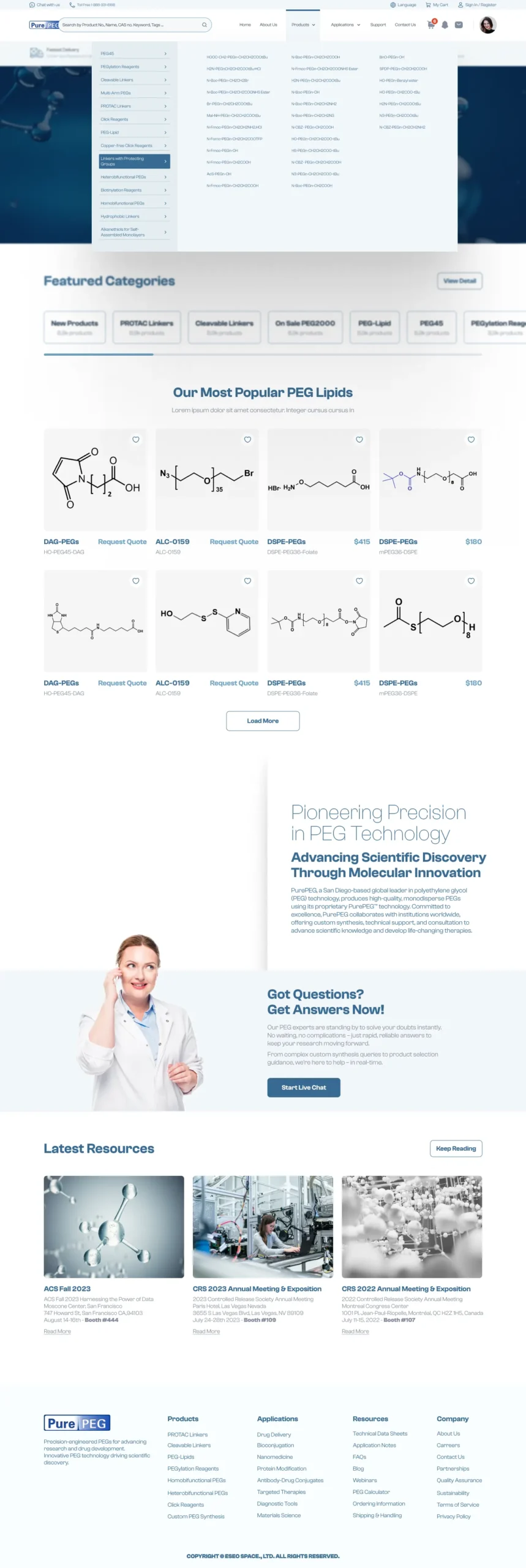
So we built dual navigation paths. Researchers could find products by type (PEG linkers, click chemistry tools) or by application (antibody-drug conjugates, protein modification). Same products, just organized for different ways of thinking. We also put search front and center—type “PEG24 amine” and you get exactly that product.
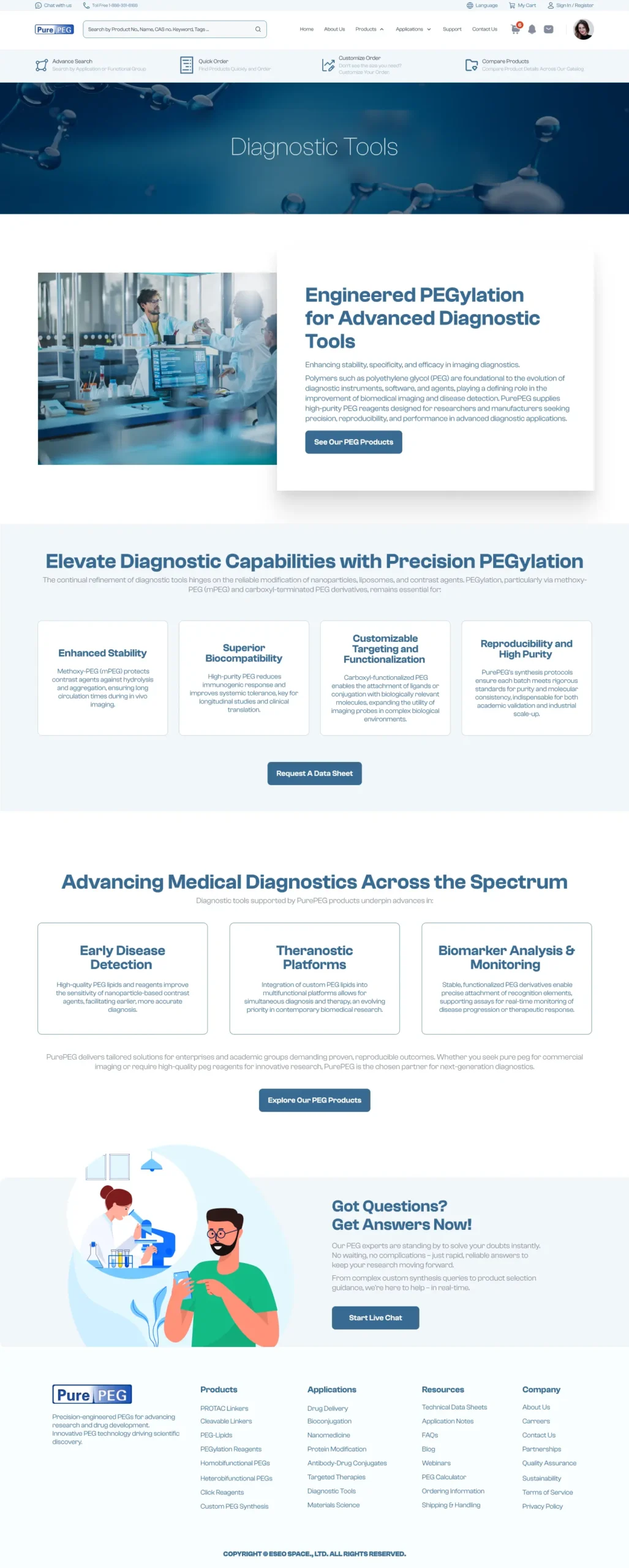
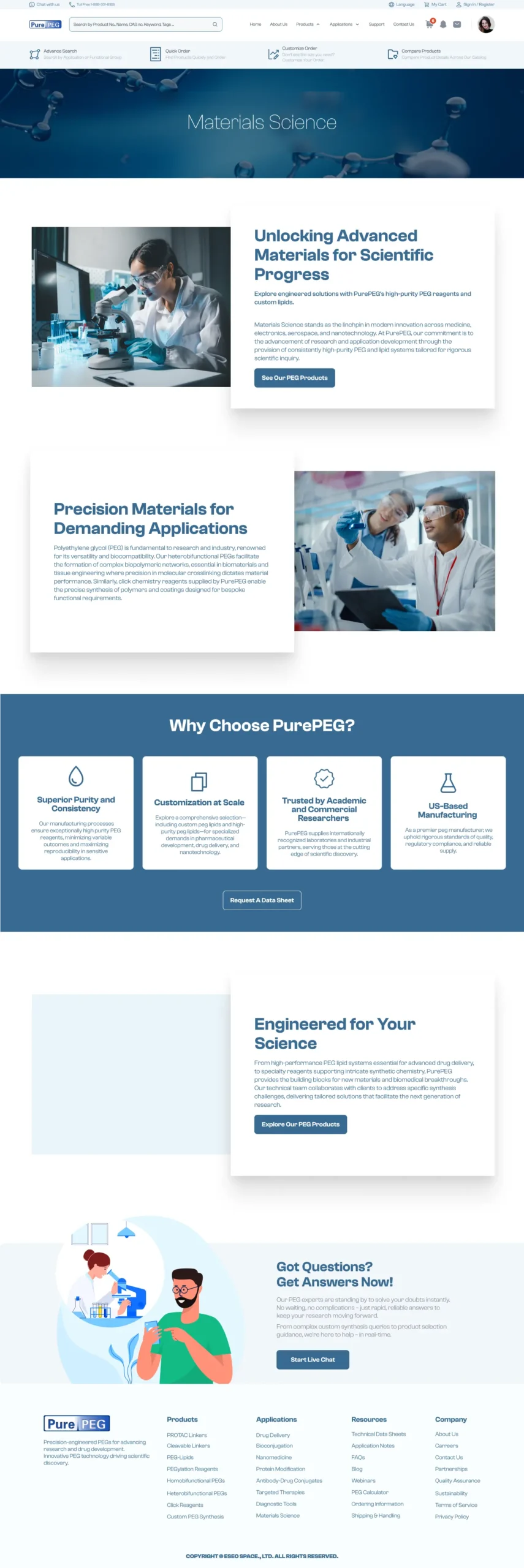
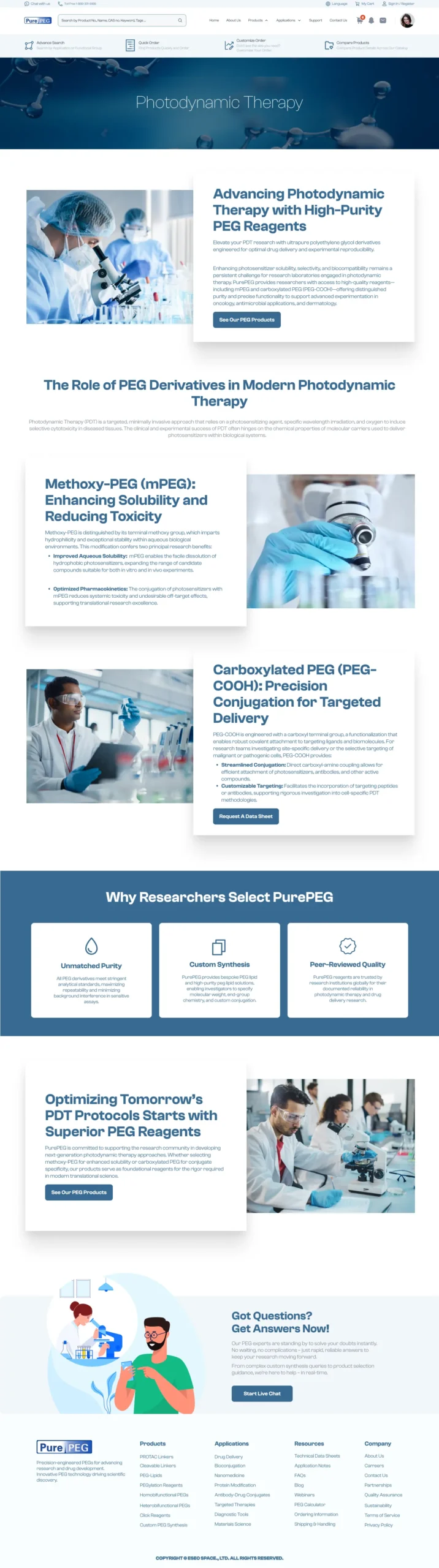
The content had to be straightforward. Product pages explain what it is, what it does, and why you’d choose it. Then we show the specs. Then there’s a data sheet download. For application pages, we wrote real use cases: “If you’re developing ADCs for breast cancer treatment, here’s why monodisperse PEG prevents batch variation.” Every technical claim was verified directly with PurePEG’s scientists.
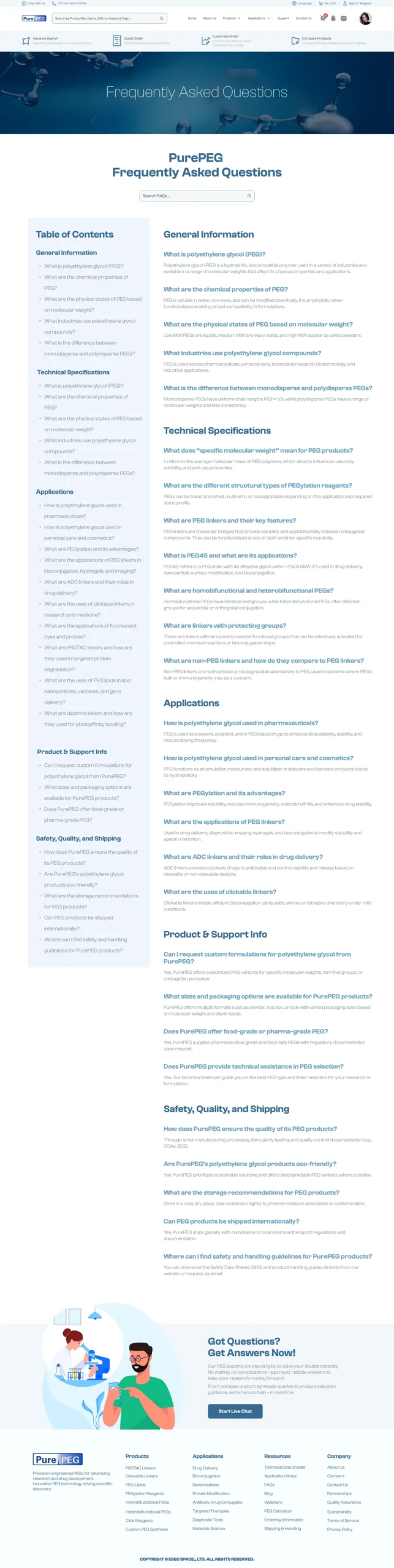
The design needed to build trust instantly. We kept it clean and professional with real product photos and actual data visualizations. No stock imagery. Technical specifications are displayed upfront because hiding details behind contact forms signals that you’re not confident in what you’re selling. We used plenty of white space because clarity matters when customers are making thousand-dollar purchasing decisions.
Speed was critical. We optimized every aspect of performance because load time directly impacts conversions. When your competitors are one Google search away, every second counts.
We also made sure the mobile experience could handle the same complexity as desktop. Researchers check product specs on their phones all the time while comparing suppliers.
Integration With Broader Strategy
The website doesn’t exist in a vacuum. We optimized for high-intent searches like “monodisperse PEG24 NHS ester” rather than generic terms like “PEG supplier.” This follows the same methodology we use for local SEO, just adapted for B2B technical products.
We built a resources section for technical articles and application notes because content marketing actually works in this space. A well-written technical piece explaining ADC linker chemistry will drive qualified traffic for years—much better ROI than paid ads.
For lead generation, we kept it natural. Quote request forms appear where they make sense. No intrusive popups. There’s consultation booking for custom synthesis projects because those conversations can’t be automated. The goal was making it easy to buy without being pushy, since technical customers spot manipulation instantly.
The Results
Customer service improved significantly because clear documentation reduced basic questions. The team could focus on complex custom synthesis projects instead of explaining product differences all day.
User engagement told the story. Time on site increased. Bounce rates dropped, especially on product pages, which meant people were finding what they needed. PurePEG’s team gained the ability to add products and update specifications on their own.
The metrics that actually matter improved too. Custom synthesis inquiries grew. Repeat orders increased. That’s what counts.
How We Work
We start by learning your business, your market, and your customers before we design anything. We build platforms that can grow with you. And we’re direct about what works and what doesn’t.
For PurePEG, that meant understanding their technology well enough to write accurate descriptions. It meant recognizing that pharmaceutical researchers make buying decisions differently than consumers. It meant building something that would be effective today and still working three years from now.
Our website design services are built around clarity, speed, and conversion. Not design trends or awards. Just results.
The Bottom Line
PurePEG needed a website that could handle complex products, serve expert customers, and drive actual business outcomes. We delivered the strategy, the execution, and a platform that works.
The site looks professional because PurePEG is professional. It’s fast because speed directly impacts conversions. It’s clear because scientists don’t have time for confusion. That’s the standard, whether you’re selling PEG molecules or any other specialized B2B product.